HelloClient - CRM system for service centers

TOP 5 Mistakes When Implementing a CRM System and How to Avoid Them

In an era of active digitalization and growing competition, more and more companies are realizing the need to implement a CRM system (Customer Relationship Management). A well-chosen and properly configured platform can organize customer databases, streamline sales processes, and increase profits. However, in practice, many face the question: how to implement CRM without mistakes and avoid losing time, money, and even customers on the path to success?

In this article, we will analyze the five most common mistakes in CRM implementation and offer practical ways to avoid them.

Table of Contents

  • 1. Wrong CRM Choice Among Multiple Options
  • 2. Lack of Clear Goals and KPIs
  • 3. Poor Training Planning and Employee Resistance
  • 4. Missing Integrations and Automation
  • 5. Insufficient Ongoing Monitoring and Adjustments
  • 6. How to Implement CRM Without Mistakes

MISTAKE #1

Wrong CRM Choice Among Multiple Options

Sales automation, lead processing, process transparency, customer communication via SMS, email, messengers, Telegram, WhatsApp, Viber, CRM, CRM system

The modern market is saturated with solutions for various business models. From large platforms with multiple modules to specialized systems for specific industries - the choice can be overwhelming when searching for the optimal option. Often companies choose CRM based only on brand popularity or pricing plans.

Why This is a Mistake?

An unsuitable CRM system can be too complex or, conversely, not functional enough. As a result, employees may sabotage working with the new tool, and management will suffer losses and wasted time.

How to Avoid

  • Create a list of requirements for your future CRM: which processes need automation, which departments will participate, what is your budget.

  • Evaluate options: conduct demo testing, watch reviews, request consultations from developers.

  • Consider scalability: ensure the chosen system can grow with your business and connect new modules when needed.

MISTAKE #2

Lack of Clear Goals and KPIs

Another problem with CRM implementation is that company management fails to formulate clear expectations and goals. As a result, employees don't understand why they need to spend time entering data, and managers lack specific criteria to evaluate effectiveness.

Why This is a Mistake?

Without a clear understanding of "why we need all this," the team loses motivation, and CRM can turn into an "expensive notebook." Moreover, without KPIs, it's impossible to understand whether the system is actually bringing benefits.

How to Avoid

  • Define priorities: increase sales conversion, improve service quality, or reduce time spent on routine tasks.

  • Establish metrics: for example, number of new leads per week, deal closing percentages, or growth in average transaction value.

  • Communicate goals to employees: explain how working with CRM will affect their results, bonuses, and personal development.

MISTAKE #3

Poor Training Planning and Employee Resistance

CRM functions, lead and contact management, sales funnel, task automation, messenger integrations, analytics, CRM reports, CRM system

The purpose of CRM is to simplify and systematize sales and marketing. But if staff doesn't understand how the new tool works and why it's needed, conflicts and sabotage can arise.

Why This is a Mistake?

Employees continue to keep records "the old way" in Excel or notebooks. Data in CRM may be duplicated or not entered at all. As a result, the system doesn't reflect the real picture, and the decision to purchase CRM starts to seem like a meaningless waste of money.

How to Avoid

  • Conduct training: organize practical workshops, video tutorials, or webinars where you step-by-step explain the functionality.

  • Appoint mentors: let experienced colleagues help newcomers.

  • Motivate CRM usage: implement performance indicators tied to proper system usage (for example, KPIs for entering lead information).

MISTAKE #4

Missing Integrations and Automation

Many companies implement CRM but forget about connections with other business tools: email, telephony, messengers, advertising platforms. As a result, the sales process is partially duplicated, some information is stored outside CRM, and users have to perform extra operations.

Why This is a Mistake?

The main purpose of CRM is to optimize and speed up work processes. If a manager needs to switch to third-party applications to create an invoice, make a call, or send an email, efficiency drops and the likelihood of errors increases.

How to Avoid

  • Analyze the customer interaction chain: which communication channels you use, where information is stored.

  • Connect necessary integrations: telephony, popular messengers, financial accounting systems.

  • Use automatic triggers: for example, after the first contact send the client a presentation email, and after closing a deal set a task for further follow-up.

MISTAKE #5

Insufficient Ongoing Monitoring and Adjustments

Sales funnel, efficiency, order statuses, CRM, CRM system

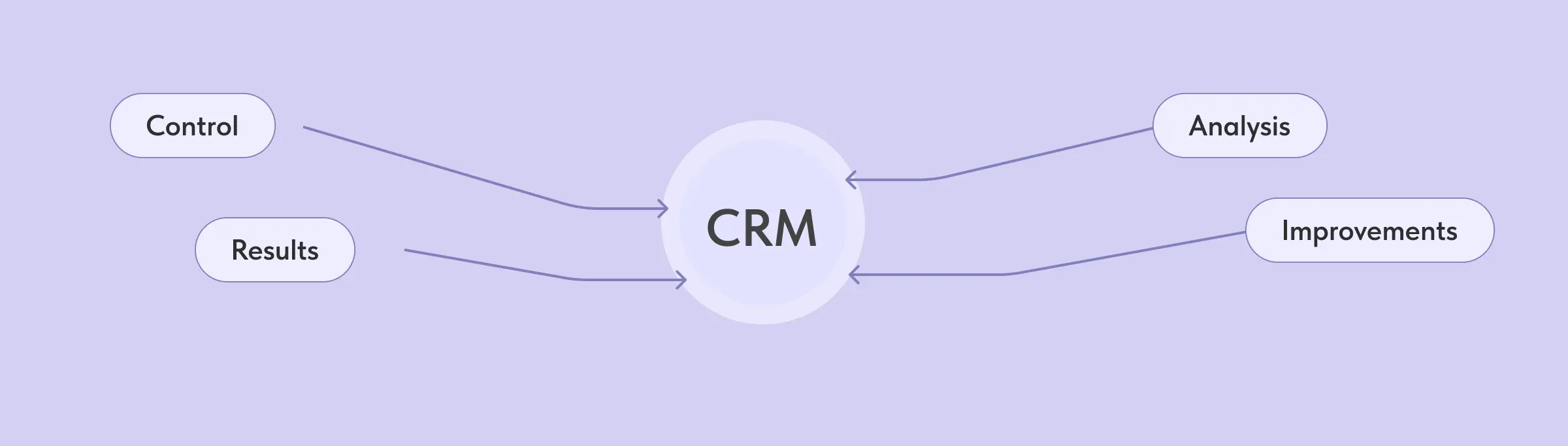
CRM implementation is not a one-time action but a process that requires regular analysis and improvements. Some companies after launching the system consider the main work done and no longer track performance metrics.

Why This is a Mistake?

Without monitoring, it's difficult to determine what results CRM brings. Problems that may have appeared during growth or changes in the company's internal structure are not tracked. Over time, the system may become outdated or stop handling increased data volumes.

How to Avoid

  • Conduct regular audits: check sales statistics, review reports, monitor the correctness of funnels and deal stages.

  • Stay in touch with the provider: learn about new features and modules that can improve efficiency.

  • Collect feedback from employees: what is convenient and what hinders work, and make changes to CRM configuration.

How to Implement CRM Without Mistakes

Implementing the HelloClient CRM system minimizes the risks of typical errors occurring

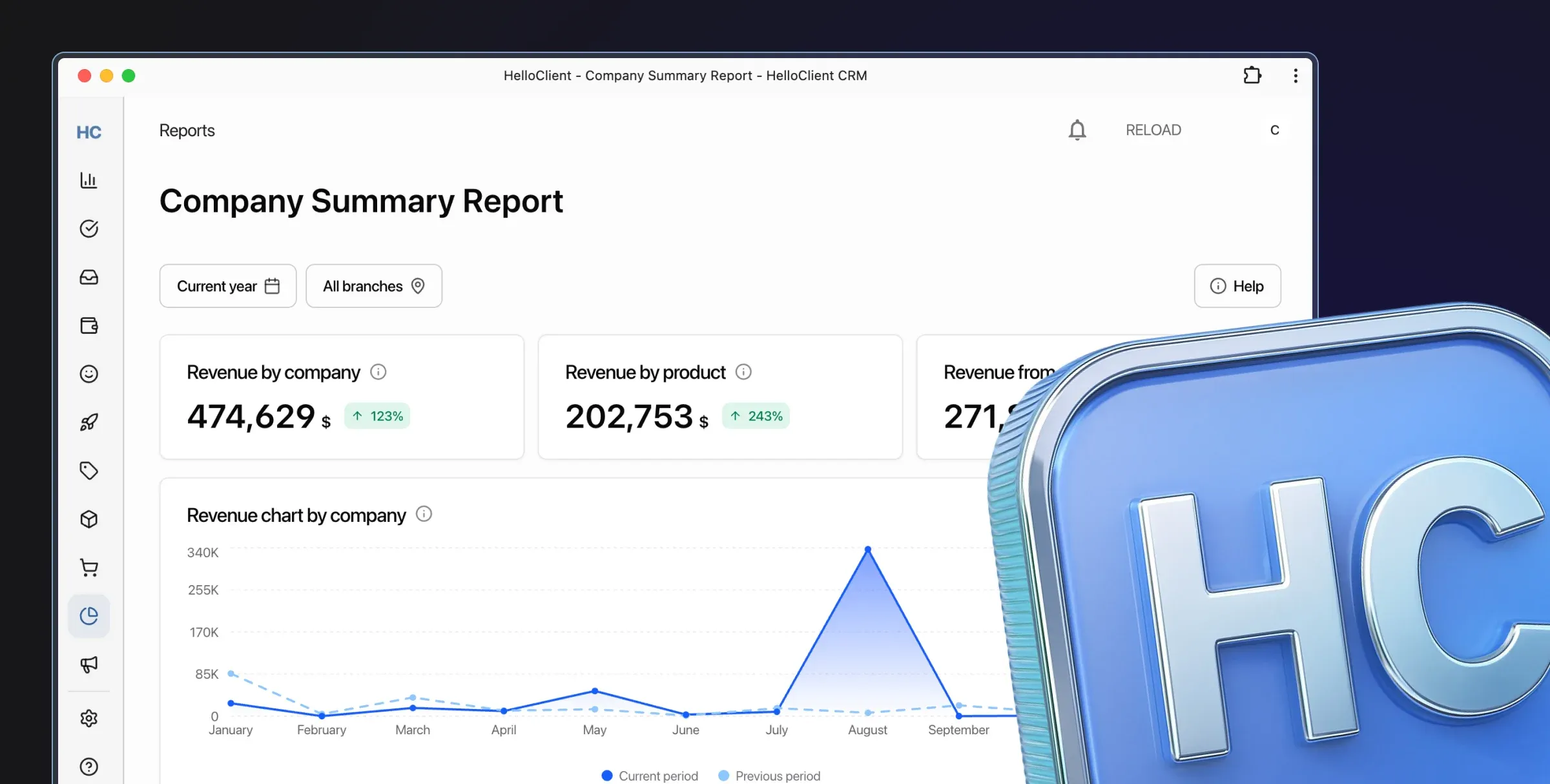
Intuitive interface allows employees to quickly master simple processes like customer management, order tracking, inventory management, and report generation in CRM

24/7 Technical Support

This allows for quick resolution of emerging issues, which is especially important during the implementation and employee adaptation stages. Users won't be left alone with problems, reducing the likelihood of sabotage or refusal to use the system.

Database Migration Assistance

One of the key mistakes in CRM implementation is incorrect or incomplete data migration. HelloClient provides support in database transfer, which guarantees data preservation and accuracy, and speeds up the integration process.

Program Capabilities Demonstration

This helps avoid the mistake related to wrong CRM choice. The company can evaluate in advance whether the system fits its tasks and business processes, eliminating the risk of choosing an unsuitable solution.

Free Trial Period

The ability to test CRM before purchase allows you to verify its functionality and convenience. This reduces the likelihood that the system will be too complex or insufficiently suitable for the business.

Thus, HelloClient offers a comprehensive approach to CRM implementation that considers the main risks and provides tools for their elimination. This makes the implementation process smoother and the system itself - an effective tool for business growth.

Success ✨ starts with HelloClient 💙 Launch CRM HelloClient right now and get 14 days of free testing

Start for Free

Still have questions? We're here to help:
Contact us on What's App What's App support

If everything is clear — join us! Register now and start managing your business for free