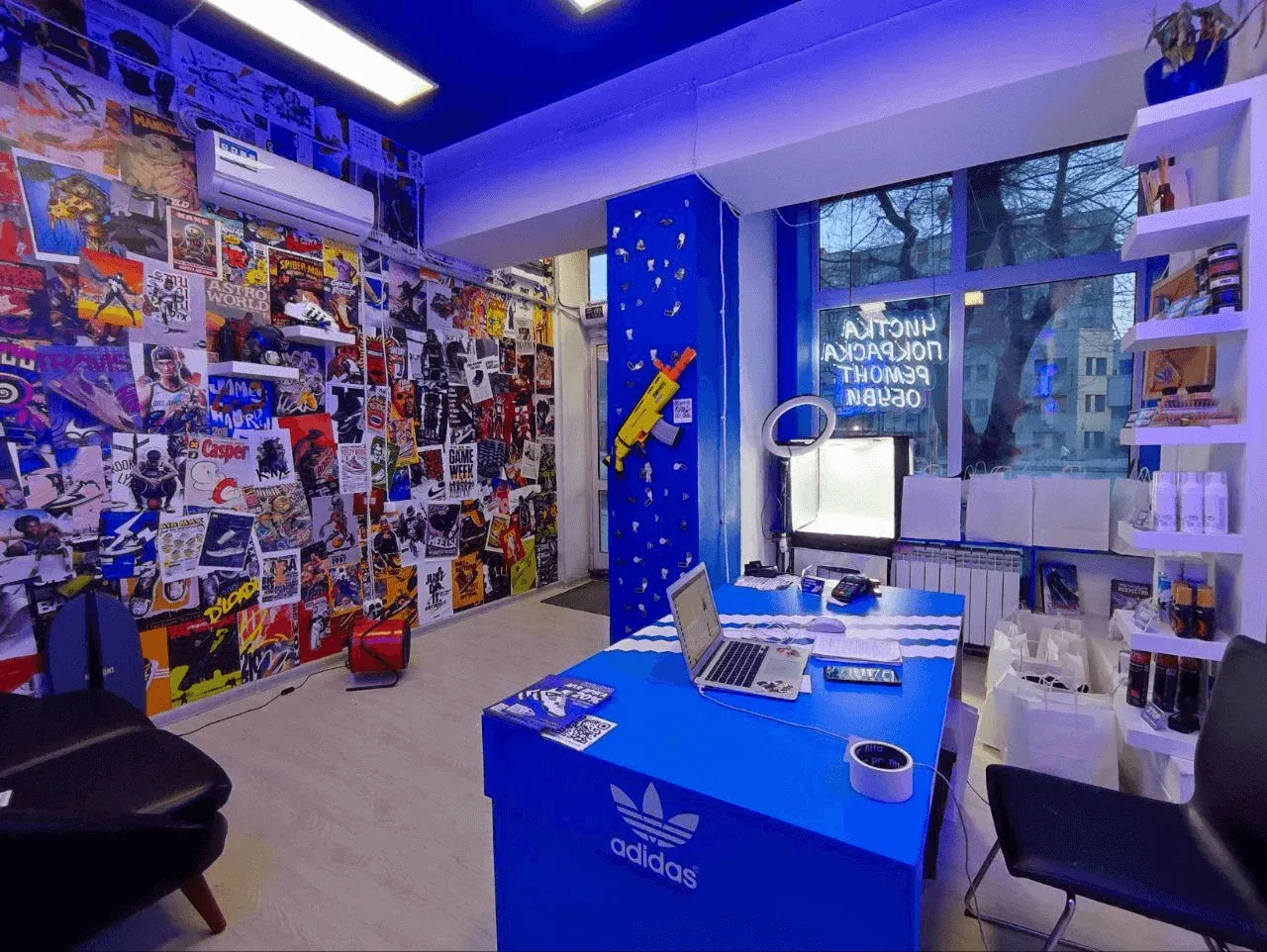
How HelloClient Helps Sneaknfresh Shoe Cleaning Network Know Everything About Their Business
Pavel Khlopov, Operations Director of Sneaknfresh — the largest shoe cleaning network in Russia, shares how HelloClient CRM helps solve business challenges and streamline operations.
Why We Needed a CRM
We've been operating since 2020. It all started with our own location in Novosibirsk, but within about five months we began focusing on franchising. Today we have over 80 partners across different cities — from Kaliningrad to Petropavlovsk-Kamchatsky.
We offer two business formats: opening a full-cycle dry cleaning facility with a workshop and reception area, or installing an automated shoe drop-off and pickup station. We developed our own model, created software, and built a mobile application. These automated stations are placed in high-traffic locations and connected to specific cleaning facilities.
Since we handle orders, they need proper administration. Bill Gates once said: "If your business is not on the internet, then your business will be out of business." I can rephrase this quote as: "If your business doesn't have a CRM, then you don't have a business."
Sometimes up to 250 pairs of shoes can accumulate in the workshop. It's crucial not to mix anything up, track deadlines at each work stage, and understand what's happening with each specific order at any given moment. Excel, which we previously used, didn't provide a complete picture and information could get lost. At one point it became clear: it was time to implement a CRM.
How We Chose and Implemented the CRM
We operate in the small business segment, so we were looking for an affordable order management solution. Choosing a CRM wasn't easy, despite the vast number of options available. Some products seemed too expensive, others were tied to scheduling specific dates and times. We found HelloClient quite by chance. This CRM is perfectly suited for small businesses.
It attracted us with its affordable pricing, user-friendly interface, and most importantly — customer-centric approach and the developers' willingness to make changes tailored to specific business needs. Currently, there are virtually no solutions on the market that work "out of the box." Every business is unique, and every product needs customization.
HelloClient helps manage reputation. Through the CRM, we can send messages to customers asking them to leave reviews. Positive reviews are immediately published online, while negative ones remain in the system where we can address them directly. HelloClient blocks negative feedback and allows us to quickly resolve situations and handle conflicts before they become public.
The system is very simple. The HelloClient developers provided initial training, explaining how everything works. This was sufficient. The CRM was implemented very quickly. It only took a few Zoom sessions to discuss our requirements. We explained what we wanted to see in the system, and they created directories with all the necessary information about brands and shoe types. Now, when a new partner joins our network, their account in HelloClient is created with just two clicks. It's enough to copy and rename a template. No additional setup is needed.
Now All Metrics Are at Our Fingertips
Without numbers, a business can't see the complete picture or identify problems. It's like a blind kitten. CRM provides transparency and helps identify weak spots.
To know everything happening in our business, we needed specific reports for the entire network that weren't available in HelloClient. Implementing reports directly in the CRM didn't seem practical. We took a different approach and built them on Looker Studio. The CRM developers helped integrate with HelloClient. Such openness and willingness to suggest third-party solutions that are equally effective is very important. Overall, based on HelloClient, we were able to set up about 20 different reports that provide complete transparency.
All metrics, both for our own retail and partners, are "at our fingertips." We also know what's happening with every order, understanding where it is — in the workshop, at the quality control stage, or ready for pickup. We use two types of reports:
Production reports. These include the number of overdue orders, orders in progress, breakdown by each specialist, and time spent at each processing stage. We have our own standards — we clean shoes within three days. If delays occur, we can identify at which stage and why they happened, and solve the problem;
Marketing reports. These allow us to understand the share of regular and new customers, cyclical patterns, segment customers by frequency of visits, spending, and more. All data comes from the CRM. For example, if we see that in a particular location we have almost no regular customers, we can work on customer retention: send reminders, share information about promotions, etc.
Numbers tell the whole story. For example, if we see that revenue in a specific city is 300,000 rubles per month, while the national average is 500,000 rubles, this prompts us to investigate the situation. As Operations Director, I don't just look at the revenue amount itself. What's important for me is to understand the reasons behind these numbers, which metrics influenced them. I evaluate the average ticket size and its depth, the number of regular customers, conversion rates by channels, and other values, then provide my recommendations. Without a CRM, this would be impossible.
Success ✨ Starts with HelloClient 💙Launch HelloClient CRM right now and get 14 days of free testing